
 Podcast

Shiva K Dhakal
UKNepalPress.com | National Press Corporation UK
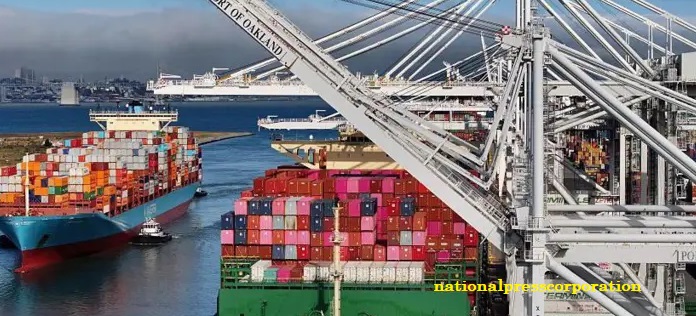
Sweeping new tariffs introduced by US President Donald Trump have officially come into force, affecting imports from more than 90 countries and signaling a dramatic shift in America’s approach to global trade.Just hours before the deadline for dealmaking expired, Mr. Trump took to his Truth Social platform, declaring that the tariffs were already bringing ‘billions of dollars’ into the US economy.
Among the most controversial moves is a 50% tariff on Indian imports—set to take effect from 27 August unless New Delhi ceases its purchases of Russian oil. Trump also floated the prospect of a steep 100% tariff on foreign-manufactured computer chips, intensifying pressure on global tech firms to expand their operations within the US.In response to that push, Apple announced a $100 billion (£75 billion) investment plan in the United States—widely seen as a reaction to mounting White House demands for reshoring production.
Last week, the Trump administration released an updated list of import duties, impacting dozens of countries. It also extended a final deadline—7 August—for nations to negotiate exemptions or reductions under what Trump calls ‘reciprocal tariff’ terms.The policy has already sent countries scrambling to broker last-minute trade agreements with Washington, in an effort to soften the blow or sidestep tariffs altogether. Trump’s trade doctrine aims to overhaul what he has frequently described as an imbalanced system that disadvantages American industries.Some of the hardest-hit economies include export-reliant nations in Southeast Asia. Laos and Myanmar, both deeply integrated with Chinese manufacturing supply chains, were handed tariffs as high as 40%. Trade analysts suggest the administration has focused its penalties on countries perceived to be aligned with Beijing.
Despite the sweeping changes, Asian financial markets appeared relatively stable on Thursday. Equity indices in Japan, South Korea, Hong Kong, and mainland China edged slightly higher, while shares in India and Australia dipped.Economist Bert Hofman of the National University of Singapore suggested that the finalized list of tariffs may offer some much-needed clarity to global markets. “This gives countries a chance to assess the real impact. Until now, it’s been months of uncertainty,” he said.
Several key trading partners—including the UK, Japan, and South Korea—have already secured deals to lower their tariff exposure, compared to the steep rates first proposed in April.The European Union has reached a broad understanding with Washington, accepting a 15% tariff on EU-origin goods. Meanwhile, Switzerland—hit with a 39% tariff, one of the highest rates—announced it would convene an emergency session after talks with US officials failed to yield a breakthrough.
Elsewhere, Taiwan, a crucial American ally in East Asia, was assigned a 20% tariff. President Lai Ching-te described the hike as ‘temporary,’ confirming that negotiations with the US are still ongoing.Canada, too, faced a tariff increase—from 25% to 35%—amid accusations by President Trump that Ottawa had failed to curb drug smuggling across the US border. Canadian authorities maintain they are actively cracking down on criminal networks.
However, thanks to protections under the United States-Mexico-Canada Agreement (USMCA), most Canadian exports are expected to bypass the new import duties.Tariffs on Mexican goods have been deferred for another 90 days while trade talks continue.












 243,GeorgeStreet,Aberdeen,UK
 info@uknepalpress.com
Discussion about this post