
 Podcast

National Press Corporation(NPC)
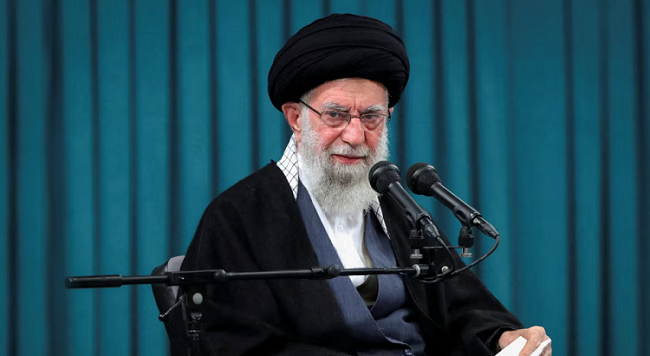
United Kingdom—Iran’s Supreme Leader Ayatollah Ali Khamenei has been killed during a US-Israeli attack on Tehran, Iranian and regional sources say. He was reportedly inside his office when the strike took place early on Saturday morning.
There has been no independent international verification of the circumstances of his death, but Iranian authorities have confirmed that Khamenei was killed during what they described as a “direct and coordinated attack”. His death marks the most dramatic escalation in decades of hostility between Iran, the United States and Israel.
US President Donald Trump described Khamenei as “one of the most evil people in history” and urged Iranians to “take back their country”, comments that have fuelled tensions across the region.
Inside Iran, reactions have been sharply divided. State media has shown large crowds mourning in the streets of Tehran and other cities, while reports from BBC Persian indicate celebrations in several urban areas. One Tehran resident told the BBC that “the world has become a better place” following Khamenei’s death, while others expressed fear and uncertainty about what comes next.
Iranian authorities have moved quickly to project stability, promising a smooth transition of power and continuity in governance. However, analysts warn that the sudden loss of the country’s most powerful figure could lead to internal instability and regional repercussions.
The Iranian Red Crescent says more than 200 people have been killed nationwide since the conflict intensified. Tehran claims at least 108 of those deaths occurred when a strike hit a girls’ school. Sources cited by the BBC’s US partner CBS say around 40 senior Iranian officials have also been killed. Israel has confirmed that it has targeted and killed several Iranian military and political leaders.
Iran has vowed what it called “the most devastating offensive operation” in retaliation against US bases and Israel. Missile and drone attacks have been reported across the Gulf region, including in Dubai, Doha, Bahrain and Kuwait.
In Qatar, explosions were heard in Doha as Iranian strikes targeted US facilities. Qatari officials said Iran launched 65 missiles and 12 drones on Saturday, most of which were intercepted. Some damage was reported, and eight people were injured by falling debris. Authorities said a limited fire in an industrial zone was caused by fragments from an intercepted missile.
Explosions were also reported in Dubai and Manama, while Oman’s state news agency confirmed a drone attack on its commercial port. Oman has long acted as a mediator in US-Iran talks and had previously avoided being drawn into direct confrontation.
Qatar and several other Arab governments have strongly condemned the attacks while reserving the right to respond. In recent years, Gulf states had sought to reduce tensions with Iran and refused to allow US forces to launch attacks from bases on their territory. Despite those efforts, they now find themselves directly affected by the widening conflict.
With the violent death of Iran’s supreme leader and retaliatory strikes spreading across the region, diplomats warn that the Middle East is entering a period of profound uncertainty, with consequences that could extend far beyond Iran’s borders.













 Edinburgh,UK
 info@uknepalpress.com
Discussion about this post