
 Podcast

UKPressNepal Reporter
Shiva K Dhakal
10 July 2025
Kathmandu, Nepal — The devastating floods triggered by the swelling of the Lehende River (Bhotekoshi) from the Chinese side on Tuesday, July 9, have caused significant damage to hydropower projects in Nepal, according to the Independent Power Producers’ Association Nepal (IPPAN). The floods have impacted more than 600 megawatts of hydropower capacity, leading to massive economic losses.
In both Rasuwa and Nuwakot districts, over 10 hydropower projects—both under construction and operational—have suffered heavy damage. IPPAN has reported that approximately 250 MW of electricity production has come to a complete halt, while construction work on more than 350 MW of projects has been forced to stop due to the disaster. The physical and financial damages are described as extensive.
Among the most affected are the 111 MW Rasuwa Gadhi Hydropower Project, the 60 MW Trishuli 3A Hydropower Project, the 25 MW Trishuli Hydropower Center, the 22 MW Chilime Hydropower Project, the 14 MW Upper Mailung, the 14 MW Devighat Hydropower Project, and the 5 MW Mailung Khola Hydropower Project, all of which have ceased production.
According to IPPAN, the damage to the Trishuli 3B Hub Substation, which facilitates power flow from the Mailung, Upper Mailung, Devighat, and Trishuli Hydropower projects, has led to the suspension of electricity generation from these plants. Except for the Devighat, Trishuli, and Trishuli 3A projects—which are government-led—most of the affected plants involve private sector participation.
Construction has also been halted on major projects such as the 216 MW Upper Trishuli 1, the 100 MW Super Trishuli, and the 37 MW Trishuli 3B hydropower projects due to flood-related damages.
The floods have not only damaged hydropower infrastructure but have also disrupted the Trishuli River Corridor’s electricity transmission lines and the Trishuli 3B Hub Substation. As a result, no electricity will be produced or transmitted from this corridor for several days, leading to estimated daily production losses amounting to tens of millions of Nepali rupees, according to IPPAN.
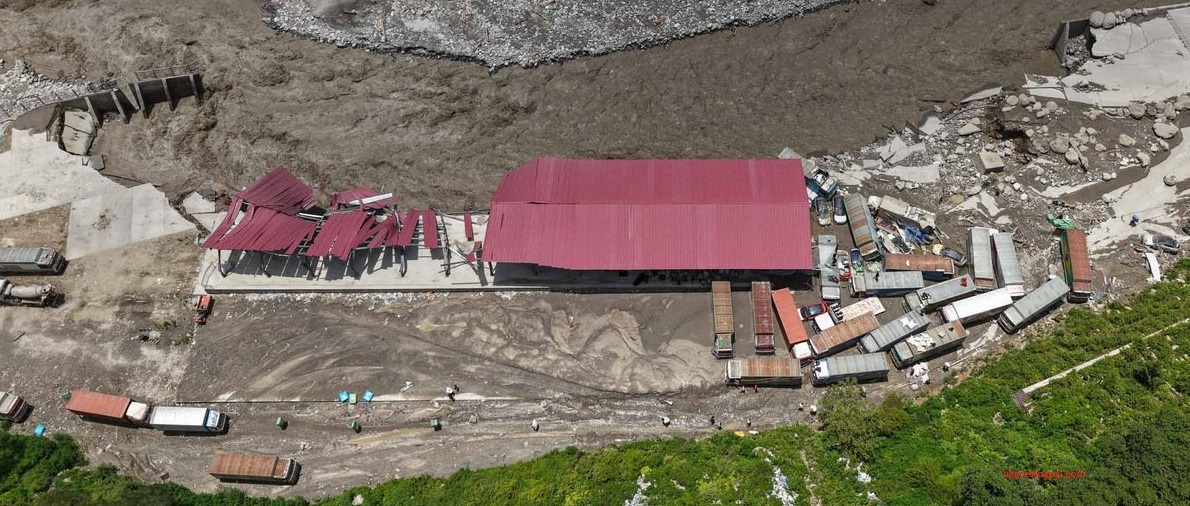
The disaster has also wreaked havoc on trade infrastructure. Dozens of cargo containers and hundreds of vehicles stationed at the Timure Dry Port and customs point were swept away by the floods, and the under-construction dry port has been left in ruins. The main Nepal–China trade bridge has also been washed away, severely impacting Nepali businesses. IPPAN expressed deep concern over the economic blow to the business community and called on the government to act swiftly to restore the vital border trade route.
With annual bilateral trade between Nepal and China exceeding NPR 100 billion, the closure of this key border crossing is expected to have serious consequences for Nepal’s customs revenue. IPPAN has urged the government to create conditions for the earliest possible reopening of the border.
Even amidst the ongoing disaster, the government successfully rescued 36 workers stranded at the Rasuwa Gadhi Hydropower Project. IPPAN has further called on the Nepal Government to facilitate the timely reconstruction of damaged infrastructure, ensure the resumption of power production and transmission, and take necessary actions to prevent further human and material losses.
















 243,GeorgeStreet,Aberdeen,UK
 info@uknepalpress.com
Discussion about this post