
 Podcast

Shiva K Dhakal
www.ukpressnepalress.com | National Press Corporation |
United Kingdom
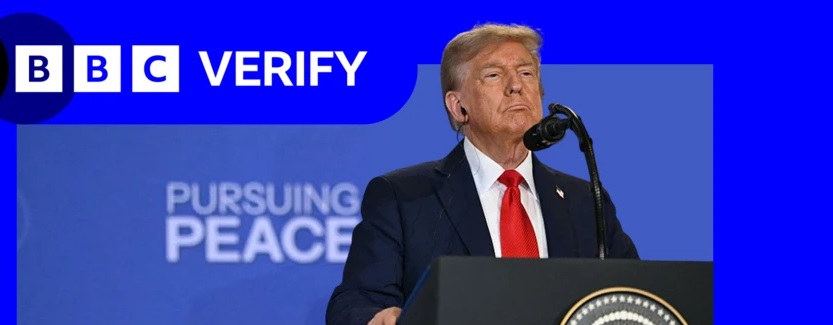
US President Donald Trump has been eager to frame himself as a global peacemaker. Speaking at the White House on 18 August, he claimed to have “ended six wars”. By the following day, that figure had grown to seven. His aides insist it is long past time for him to be recognised with a Nobel Peace Prize.
Yet a closer look at the conflicts he cites raises questions over how much credit he can truly claim — and whether these were wars at all.
Israel and Iran: a fragile pause
In June, a 12-day confrontation erupted after Israel, with US backing, struck Iranian nuclear sites. Trump quickly declared victory, posting online that both sides had agreed to a ceasefire. But Iran’s Supreme Leader called it a “decisive victory” for Tehran, while Israel suggested further strikes could follow. Analysts describe the outcome as a tactical pause, not a durable peace.
India and Pakistan: conflicting accounts
Hostilities in Kashmir flared in May, lasting just four days. Trump announced he had secured a “full and immediate ceasefire” after late-night talks. Pakistan publicly praised him, even recommending him for a Nobel Prize. India, however, firmly rejected suggestions of US mediation, insisting the truce was negotiated directly between the two militaries.
Rwanda and DR Congo: long-standing tensions
In Washington, Trump hosted a peace agreement between Rwanda and the Democratic Republic of Congo in June. It was aimed at ending renewed clashes over eastern Congo’s mineral-rich territories. Yet the deal simply reinforced an earlier ceasefire, with few guarantees it would hold.
Thailand and Cambodia: pressure through trade
When border clashes broke out in July, Trump threatened to suspend trade talks unless the violence ended. Days later, both sides announced an unconditional ceasefire. While Trump portrayed it as a diplomatic triumph, Malaysia had in fact mediated the talks.
Armenia and Azerbaijan: peace with caveats
A deal signed at the White House in August brought both leaders together to announce an end to their decades-long dispute over Nagorno-Karabakh. Trump’s Oval Office ceremony gave the moment political theatre, but experts stress that months of negotiations had already prepared the ground.
Egypt and Ethiopia: no war, no deal
Trump has also claimed credit for “resolving” tensions over Ethiopia’s Nile dam. In reality, there was no war to end, and no agreement has been reached. His intervention amounted to little more than rhetoric.
Serbia and Kosovo: avoiding a war that wasn’t
Trump has boasted of stopping a “big war” between Serbia and Kosovo. Yet experts note that neither side was at war in the first place. US-brokered talks in 2020 produced economic normalisation agreements, but these fell far short of resolving long-standing political disputes.
Analysis: boasts versus reality
Trump’s narrative of being a “peacemaker-in-chief” rests on shaky ground. While his interventions occasionally helped de-escalate tensions or apply pressure, many of the conflicts he cites were either short-lived, unresolved, or not wars in the conventional sense.
Critics argue his claims are part diplomacy, part theatre — amplifying limited outcomes into sweeping victories. Supporters, however, counter that even temporary ceasefires can prevent bloodshed.
Ultimately, Trump’s boasts may say less about wars ended than about the political drama he continues to cultivate on the global stage.












 Edinburgh,UK
 info@uknepalpress.com
Discussion about this post