
 Podcast


Shiva K Dhakal
( Op-ed)
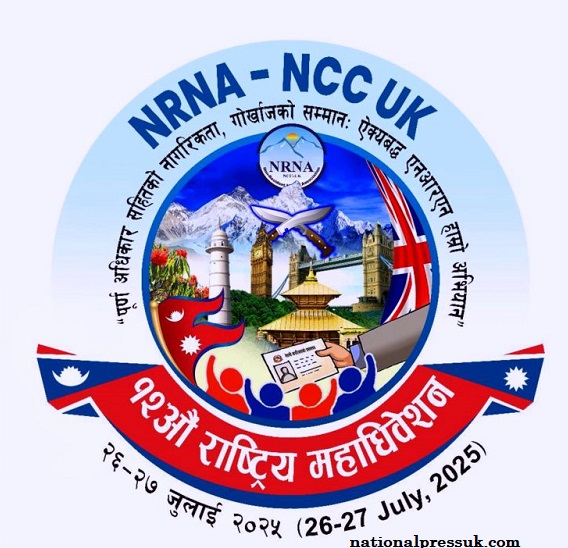
As the Non-Resident Nepali Association (NRNA) gears up for its global election on July 26, 2025, all eyes—especially from the diaspora—are fixed on the National Coordination Council (NCC) elections, particularly the NRNA UK Chapter, where the association first took root.
The NRNA was founded to represent the voice, identity, and interests of Nepali people living abroad. But with political-style alliances emerging and campaign narratives echoing Kathmandu’s party politics, the 2025 elections raise a fundamental question: Has the NRNA strayed from its mission, or is it simply evolving under new pressures?
The UK, historically a diplomatic and socio-cultural ally of Nepal, now hosts one of the largest and most active chapters of the NRNA. Ideally, this chapter should lead by example—fostering democratic, transparent, and non-partisan governance within the diaspora. Yet, recent developments suggest otherwise.
A prominent panel announced its candidacy this week in London, branding itself as “progressive” and “community-driven.” Yet, its core members are affiliated—formally or informally—with Nepal’s political parties, notably the CPN-UML, Nepali Congress, and Maoist Centre. Despite this, the panel publicly denies any political influence. This contradiction is not only dishonest—it insults the intelligence of the diaspora electorate. Their public messaging— “We are not political”—clashes with the political ties and motivations clearly visible behind the scenes. If this isn’t politicisation, what is? Is NRNA becoming a shadow proxy of Kathmandu’s political theatre?
Democracy thrives when voters are given real choices where candidates who stand on integrity, track record, and community vision. However, the UK’s NRNA elections are starting to mirror Nepal’s fragile coalition culture, where alliances are formed out of political convenience rather than ideological clarity or genuine community representation.
Panels have reportedly negotiated behind closed doors, bargaining roles and responsibilities long before the ballots are cast. Power-sharing agreements, not public interest, are guiding their campaigns. The narrative is all too familiar: win the election, divide the posts, and execute decisions with minimal grassroots accountability.
Such practices undermine the democratic spirit of the NRNA. When elections become a vehicle for backroom deals and party agendas, the organisation ceases to function as a community body. Instead, it becomes a diaspora extension of Nepal’s fragmented political machinery.
The most alarming consequence of this politicisation is the erosion of trust. Nepali expatriates—migrant workers, students, professionals, and families—did not join NRNA to watch party politics play out on foreign soil. They sought a unifying platform to protect their rights, amplify their voices, and serve as a bridge between Nepal and the world.
Instead, what many are witnessing is groupism, misinformation, and tokenism. Meaningful agendas—like educational advocacy, immigration reform, investment facilitation, or youth engagement—are being drowned out by political manoeuvring.
Let us not forget that NRNA’s guiding motto is “For Nepali, By Nepali.” But now it begs the question—which Nepali? The one who serves the people, or the one who serves a party?
Despite these growing concerns, there is still optimism. A new wave of young, energetic, and independent-minded Nepalis in the UK and around the world are beginning to demand better. They are calling for panel-free, non-political elections and greater transparency in candidate selection. They are raising their voices, forming advocacy groups, and proposing constitutional reforms within NRNA.
This is a healthy sign. The diaspora community is waking up.
To preserve NRNA’s credibility, it’s essential that candidates disclose any political affiliations honestly. Panels must be vetted based on their performance, not their political backers. The NRNA constitution should be revised to ensure genuine neutrality, with clear guidelines separating it from Nepali political influences.
Let’s be clear—NRNA is what its members make it. The real power lies with the voters. This election isn’t just a formality; it’s a referendum on the future of the diaspora movement.
Voters must ask tough questions:
– Who are these candidates, and what have they done for the community?
– Do they represent diverse groups within the diaspora?
– Will they remain transparent, accountable, and truly non-political once elected?
Do not vote for party puppets. Vote for leaders with a heart, a plan, and a community-first mindset.
Political parties must also show restraint. The NRNA is not your external playground. You’ve had your time in Nepal—leave the diaspora to build its own future. Allow NRNA to be a space for innovation, collaboration, and unity, not another front in your endless turf war.
The diaspora doesn’t need imported political ideologies. It needs results, vision, and integrity.
As the countdown begins to NRNA’s global elections, and especially in the symbolic UK chapter, there’s an urgent need for self-correction. Let this election serve as a wake-up call—not just for candidates and voters, but for the broader Nepali community. The NRNA must rediscover its purpose. It was not created to mimic Singha Durbar’s chaos abroad. It was formed to unite and empower Nepalis worldwide, to be the global face of Nepal’s resilience, diversity, and potential.
It’s time to step up, speak out, and vote with conscience—not conditioning.














 Edinburgh,UK
 info@uknepalpress.com
Discussion about this post