
 Podcast


Som Nath Sapkota
Deputy General Secretary, NRNA ICC
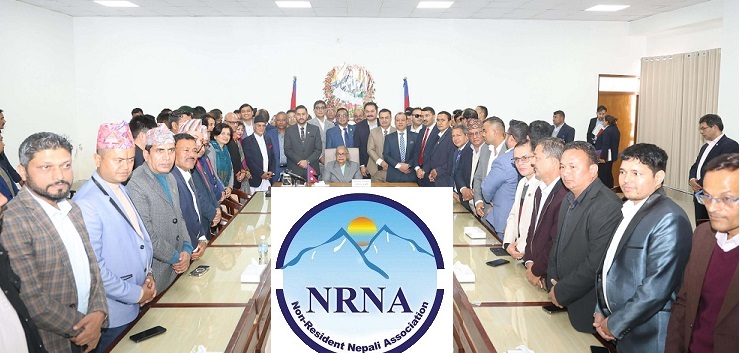
After years of internal division, legal disputes, and frustration among its global membership, the Non-Resident Nepali Association (NRNA) has taken a decisive step towards reconciliation. A long-running conflict between rival leadership groups—one led by Dr Badri KC and the other by Mahesh Kumar Shrestha—has formally ended with the signing of a landmark ten-point unity agreement, witnessed by Prime Minister Sushila Karki. For thousands of Nepalis across the world who had watched the prolonged dispute with concern, the development marks a moment of renewed hope and institutional stability.
The NRNA, a global body representing millions of Nepalis living abroad, has long played a vital role in strengthening Nepal’s ties with its diaspora by promoting investment, cultural engagement, disaster relief, and social support. However, years of internal political tensions eroded the organization’s cohesion, undermined its credibility, and stalled its work. Many members felt disillusioned as the institution designed to unite the global Nepali community became increasingly divided.
The dispute intensified in 2023, when two separate general conventions produced two different leadership committees. The first, under Mahesh Shrestha, emerged from a unity convention held in May under the coordination of former president Shesh Ghale. The second, led by Dr Badri KC, was elected during the eleventh general convention in October. Both factions claimed legitimacy, and the disagreement escalated to the Supreme Court, leaving members worldwide confused and uncertain about the organization’s future.
With the newly signed unity agreement, both sides have now opted for cooperation over confrontation. The Shrestha-led committee has formally assumed responsibility at the NRNA Secretariat in Baluwatar, while the KC-led committee has also been officially recognised. Both factions have agreed to hold the twelfth general convention as a unity event by 17 April, ensuring that the leadership elected from this process carries a clear and undisputed mandate. This step is expected to provide the organization with a stable foundation after years of fragmentation.
To guarantee fairness and transparency, an eleven-member steering committee has been appointed to oversee the unity convention, with none of its members permitted to contest in the election. In addition, a system management committee has been formed, entrusting General Secretaries Gauriraj Joshi and Baburam Lama with full authority over membership administration—an issue at the heart of earlier disputes.
The agreement also prioritises financial and legal accountability. All ongoing court cases related to leadership disputes will be withdrawn or resolved through mutual understanding. An independent third-party audit will be conducted to ensure financial clarity. The Ministry of Foreign Affairs will archive the unity agreement and support the resolution of any future disagreements, strengthening institutional oversight.
The settlement further acknowledges and respects past leaderships. Committees formed under former presidents—including Dr Badri KC, Kul Acharya, Rabina Thapa, Binod Kunwar, and Rajendra Kumar Sharma—will be officially recognised as past office bearers. Both the general secretaries and treasurers will present verified reports at the upcoming convention, after which Dr KC will formally hand over responsibilities to Shrestha, ensuring a dignified and transparent transition.
Despite this breakthrough, challenges remain. Rebuilding trust after years of tension will require sustained commitment to transparency, fair elections, and non-political conduct. Many discouraged members will require reassurance through consistent actions from the leadership. Safeguarding unity, maintaining financial discipline, and preventing external political influence will be key tests in the months ahead.
Yet the opportunities ahead are equally significant. A unified NRNA can once again amplify the voice of the global Nepali diaspora, boost investment in Nepal, strengthen education and disaster response efforts, encourage youth engagement, and deepen Nepal’s international relationships. Most importantly, it can revive the emotional and cultural connection between Nepalis abroad and their homeland.
The unity agreement represents more than a political compromise—it is a chance for institutional renewal. With both Dr Badri KC and Mahesh Shrestha committing to unity, autonomy, and a non-political ethos, the responsibility now lies with the entire NRNA community to protect this hard-earned consensus. If implemented with sincerity, the agreement can transform years of division into a future grounded in cooperation, trust, and shared purpose.













 243,GeorgeStreet,Aberdeen,UK
 info@uknepalpress.com
Discussion about this post